- The Stem Cell Times
- Posts
- The Musculoskeletal Syndrome of Menopause Is Real
The Musculoskeletal Syndrome of Menopause Is Real
Why joint pain, frozen shoulder, tendon problems, muscle loss, and slower recovery can suddenly show up in midlife.

Dr. Tammy Penhollow
November 03, 2026

A woman called my office because suddenly, everything hurt.
Both shoulders. Both knees. Widespread aches.
She loves hiking Camelback Mountain, but something that had always brought her joy had become difficult because her body simply did not feel like the same body anymore.
And if you are not the woman in this story, there is a very good chance you know her.
She thought she needed a regenerative medicine workup.
Maybe PRP.
Maybe bone marrow concentrate.
Maybe several of her joints had suddenly deteriorated at the same time.
But as we talked, another pattern emerged.
She was in the menopause transition.
Rather than start treating multiple joints individually, I encouraged her to address the menopause piece with a physician who specializes in that care.
Within about three months, she reported that her joint pain had resolved.
That does not prove that hormone therapy is a treatment for joint pain.
It does illustrate something I think women deserve to hear:
Sometimes the joints are not the whole story.
“When multiple musculoskeletal problems appear at the same time, I do not automatically assume several body parts suddenly failed. I ask what changed in the system around them.”
It Has a Name
In 2024, physicians Vonda Wright, Jonathan Schwartzman, Rafael Itinoche, and Jocelyn Wittstein proposed the term musculoskeletal syndrome of menopause to describe a constellation of musculoskeletal changes associated with declining estrogen during the menopause transition.
Their review estimated that more than 70% of women experience musculoskeletal symptoms during the transition from perimenopause through postmenopause, with approximately 25% experiencing severe or disabling symptoms. The syndrome includes joint pain, loss of lean muscle mass, loss of bone density, tendon and ligament problems, adhesive capsulitis, cartilage changes, and progression of osteoarthritis.
And the evidence base has continued to grow.
A 2026 systematic review and meta-analysis included 37 observational studies involving more than 93,000 women. Muscle or joint pain was reported by approximately 40% of premenopausal women, 57% of perimenopausal women, and 59% of postmenopausal women.
The authors were appropriately cautious. These were observational studies, there was significant variability among them, and the specific causes of pain were often poorly characterized.
But the overall pattern was clear:
Musculoskeletal symptoms become more common during the menopause transition.
Your Biology Changed. That Can Change Your Musculoskeletal System.
Estrogen does far more than regulate reproduction.
Estradiol receptors are present throughout musculoskeletal tissue, including bone, muscle, tendon, ligament, and cartilage.
As estrogen levels fluctuate and ultimately decline, the biological environment around those tissues changes.
The 2024 review cites an average reduction of approximately 10% in bone mineral density during perimenopause and approximately 0.6% loss of muscle mass per year after menopause.
That does not mean every ache after age 40 is hormonal.
It means that when a woman who was previously active suddenly develops diffuse joint pain, new tendon problems, reduced recovery capacity, loss of strength, or an atraumatic frozen shoulder, menopause belongs in the differential diagnosis.
The American Academy of Orthopaedic Surgeons now specifically discusses musculoskeletal syndrome of menopause and identifies accelerated bone loss, joint inflammation, arthritis risk, muscle changes, and frozen shoulder among the issues clinicians and patients should recognize.
Frozen Shoulder Can Be a Clue
A woman in her 40s or 50s develops shoulder pain.
Then stiffness.
Then she realizes she cannot reach behind her back, fasten a bra, put on a jacket normally, or sleep comfortably on that side.
There may have been no major injury at all.
That is adhesive capsulitis, or frozen shoulder, and it disproportionately affects women in this age range.
The menopause transition should not replace a proper shoulder examination. Diabetes, thyroid disease, prior surgery, trauma, cervical pathology, and other causes still matter.
But menopause should not be ignored simply because the MRI shows something else.
A finding on imaging and the biological reason a problem developed are not necessarily the same thing.
The Mistake I Do Not Want Women to Make
Something changes at the gym.
You recover more slowly.
A tendon starts hurting.
Your knee becomes irritated.
You feel less powerful than you did a year ago.
So you decide your body is telling you to back off.
You stop lifting heavy things.
You move to lighter weights.
Maybe you abandon strength training altogether and stick with cardio because it feels safer.
That is not the direction I want you moving.
It does not mean pushing through an injury or loading damaged tissue recklessly.
It means that the answer to a changing musculoskeletal system is generally not to stop challenging the musculoskeletal system.
Resistance training remains one of our most important tools for maintaining strength and functional capacity.
A 2026 systematic review and meta-analysis of 126 studies involving more than 4,000 women found significant improvements in muscular strength with resistance training in both premenopausal and postmenopausal women.
The exact training prescription during the menopause transition is still being studied, and individualization matters. But abandoning resistance training because your body feels different can move you in exactly the wrong direction.
Modify when necessary. Progress intelligently. Treat an injury when one exists. But protect your muscle.
🎥 Continue Learning
The Musculoskeletal Syndrome of Menopause: Why Your Joints Hurt and What to Do About It
I recorded an entire episode on this because I think too many women are being told some version of:
“You're getting older.”
“It's just menopause.”
“Stop doing so much.”
That is not enough.
In the video, I explain the patient story that opened this issue, what the musculoskeletal syndrome of menopause means, why muscle and bone preservation become increasingly important, why frozen shoulder can be a clue, and why I do not want active women automatically backing away from strength training.
What About Menopausal Hormone Therapy?
Menopausal hormone therapy is a legitimate evidence-based medical treatment for appropriately selected women.
Current guidance supports hormone therapy for bothersome vasomotor symptoms, genitourinary syndrome of menopause, primary ovarian insufficiency, and prevention of bone loss and fracture in appropriate patients.
But there is an important distinction.
Hormone therapy is not currently recommended solely as a treatment for arthritis, joint pain, frozen shoulder, or other musculoskeletal diagnoses outside of its role in osteoporosis risk reduction.
That is why I would not look at a painful shoulder and simply say, “You need hormones.”
The musculoskeletal diagnosis still matters.
But if a woman develops several new musculoskeletal symptoms during the same window that her sleep changes, menstrual pattern changes, hot flashes begin, body composition shifts, or other menopause symptoms emerge, then I want menopause care included in the conversation.
I do not prescribe menopausal hormone therapy in my practice.
When it is appropriate, I want that discussion happening with a physician who is knowledgeable in contemporary menopause care and can evaluate the woman's individual risks, symptoms, goals, and treatment options.
You May Not Need a Hormone Panel to Prove You Are in Menopause
This is another place where more testing is not automatically better medicine.
For otherwise healthy women age 45 or older with a typical clinical picture, menopause and perimenopause are usually diagnosed clinically.
Routine estradiol testing is not recommended to identify menopause in this group, and FSH testing has limited indications because hormone levels fluctuate substantially during the transition.
That does not mean laboratory evaluation has no role.
Thyroid disease, vitamin D deficiency, glucose dysregulation, anemia, inflammatory disease, and other medical conditions can contribute to fatigue, weakness, pain, or impaired recovery and may deserve evaluation based on the individual clinical picture.
The point is:
Do not reduce menopause care to one hormone number.
Three Things I Want You to Remember
1. Several painful areas appearing together may be a systemic clue.
Your shoulder, knee, foot, and back did not necessarily all fail independently within the same six months.
Sometimes something changed in the biological environment around them.
2. Do not abandon strength because your body feels different.
A changing body may require different programming, better recovery, more precise loading, or treatment of a real injury.
It does not mean muscle suddenly stopped mattering.
In this phase of life, muscle matters more.
3. Menopause should not become another lazy diagnosis.
Do not let someone dismiss a torn tendon, unstable knee, neurologic deficit, inflammatory arthritis, or other real pathology as “just menopause.”
The correct approach is not hormones or musculoskeletal medicine.
It is recognizing when both belong in the evaluation.
Bone Health Is Part of the Musculoskeletal Conversation
Muscle gets much of the attention because we can see and feel strength change.
Bone loss can be silent.
That is one reason I pay attention to vitamin D status, nutrition, resistance training, and other factors involved in skeletal health, particularly as women enter midlife.
This is why I often discuss high-quality supplements with patients who are working to improve their overall health and create a more favorable environment for healing.
If you’re not already using a structured approach, I’ve created a Fullscript dispensary with formulations I trust and use in practice.
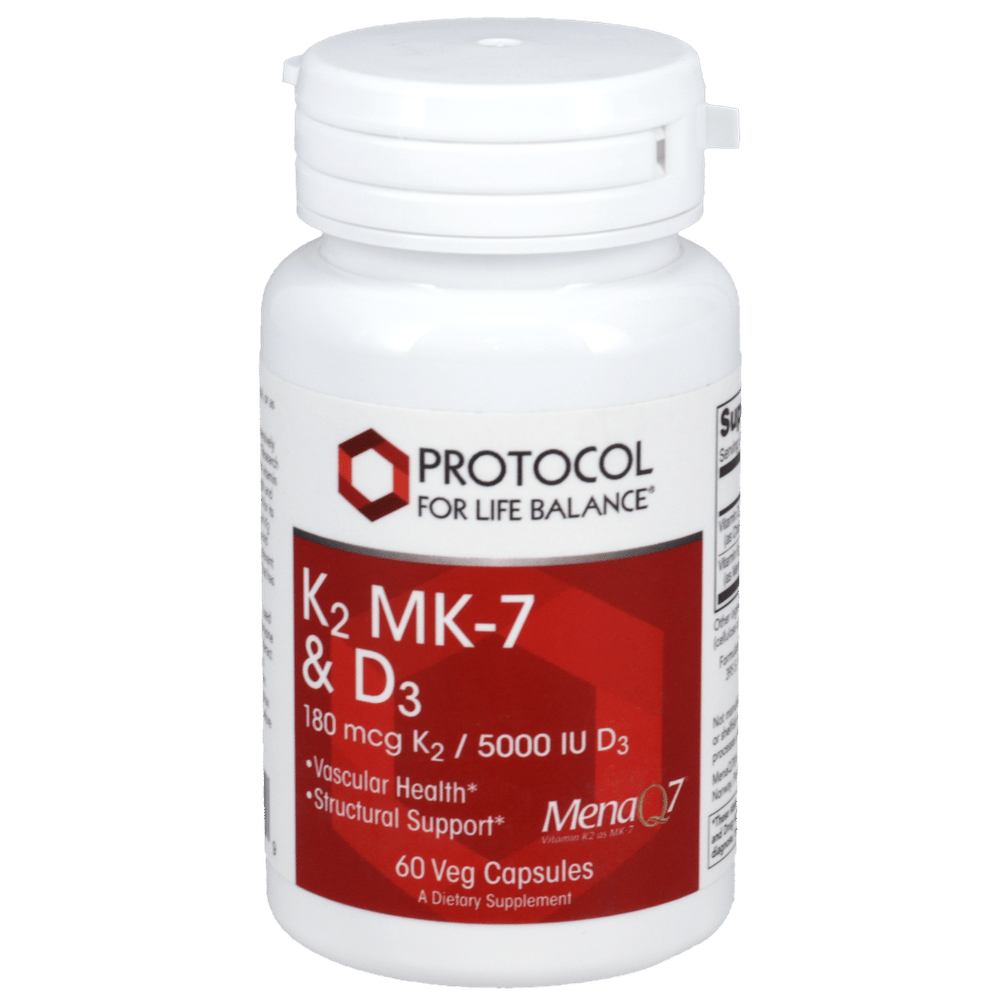
Featured This Issue: Protocol for Life Balance K2 MK-7 & D3
Vitamin D plays an established role in calcium absorption and bone metabolism.
Vitamin K is required for the function of several proteins involved in bone metabolism, including osteocalcin.
The Protocol for Life Balance formulation combines 5,000 IU of vitamin D3 with 180 mcg of vitamin K2 as MK-7.
And this is where context matters.
I do not think of a 5,000 IU vitamin D product as an automatic “everyone should take this every day” supplement.
The adult tolerable upper intake level for vitamin D is 4,000 IU per day from all sources, although physicians may appropriately use higher doses in selected patients. Vitamin D supplementation should therefore be individualized rather than assumed.
Vitamin K also has an important medication interaction. Anyone taking warfarin or a similar vitamin K antagonist needs to discuss vitamin K intake with the prescribing physician rather than adding this supplement independently.
This is not a treatment for menopause, osteoporosis, or joint pain.
It is one possible component of supporting skeletal health when the formulation and dose are appropriate for the individual.
Quick Answers
Can menopause really cause joint and muscle pain?
The association is increasingly well documented. A 2026 meta-analysis found muscle or joint pain in approximately 57% of perimenopausal women compared with 40% of premenopausal women, although the evidence is observational and individual symptoms still require appropriate evaluation.
Does joint pain during menopause mean I need hormone therapy?
No.
Hormone therapy may be appropriate for some women for established menopause-related indications, including prevention of bone loss and fractures, but it is not currently recommended solely as treatment for arthritis, joint pain, or frozen shoulder.
Do I need hormone blood tests to know whether I am in perimenopause?
Usually not if you are 45 or older with a typical clinical presentation.
Menopause is generally a clinical diagnosis in this age group, and routine estradiol or FSH testing can be misleading because levels fluctuate.
Should I stop strength training if my joints start hurting during perimenopause?
Do not push through an undiagnosed injury.
But stopping resistance training altogether is generally not the goal. The better approach is to understand what is causing the symptoms, modify loading appropriately, and continue protecting muscle and strength as part of the long-term plan.
📘 Before You Decide Your Body Is “Just Getting Older”
Women deserve better than being told that pain, weakness, loss of function, or declining physical confidence are simply the price of aging.
You also deserve better than having every symptom automatically blamed on menopause.
Good medicine still begins with the diagnosis.
That is why I created The Patient's Guide to Ethical Regenerative Medicine.
It explains how to evaluate regenerative care, what responsible treatment should look like, what questions to ask before a procedure, and when another category of treatment may be more appropriate.
The Patient's Guide to Ethical Regenerative Medicine
The Bottom Line
BIf you are in your 40s or 50s and suddenly feel as though your body has changed, believe what you are noticing.
But do not immediately assume that your joints have simply worn out.
The menopause transition can change muscle, bone, tendon, cartilage, inflammation, and recovery capacity.
That biology deserves consideration.
At the same time, do not let menopause become an excuse to stop diagnosing actual musculoskeletal problems.
Look at the joint. Look at the tissue. Look at the mechanics. And look at the biology around all of it.
Then protect your muscle.
Protect your bone.
Keep moving.
Keep lifting intelligently.
And make decisions based on the complete picture rather than being told to simply accept decline.
Your body changed. Your strategy can change with it.
To better movement,
Tammy J. Penhollow, DO
Architect of Spine and Joint Health
Precision Regenerative Medicine™
Structure First. Precision Always.
References
Wright VJ, Schwartzman JD, Itinoche R, Wittstein J. The musculoskeletal syndrome of menopause. Climacteric. 2024;27(5):466-472.
Kruse C, et al. Musculoskeletal Manifestations of Perimenopause: A Systematic Review and Meta-Analysis of 93,021 Women. JB & JS Open Access. 2026;11(1).00254.
It's Never Too Late: The Impact of Resistance Training on Strength and Body Composition in Females Across the Lifespan. Systematic review and meta-analysis. 2026.
The Menopause Society. Statement on Hormone Therapy Misinformation. Current indications and limitations of menopausal hormone therapy.
National Institute for Health and Care Excellence. Menopause: Identification and Management. Updated guidance on clinical diagnosis and laboratory testing.
If there is a woman in your life who suddenly feels as though her joints, muscles, and recovery all changed at once, share this issue with her.
DISCLAIMER: This media is for general informational purposes only and does not constitute the practice of medicine, nursing, or other professional healthcare services, including the giving of medical advice. No Doctor/Patient relationship is formed. Use of this information and the materials linked to this media is at the user’s own risk. The content on this media is not intended to be a substitute for professional medical advice, diagnosis, or treatment. Users should not disregard or delay in obtaining medical advice for any medical condition they have, and they should seek the assistance of their healthcare professionals for any such conditions. |
DISCLOSURE: It's my pleasure to provide you with this information and tools offered at no cost. To do this, please note that I am a partner with various companies that I trust. I do receive a small commission when you follow links and purchase items, but it's all free to view if you want it to be. Your price does not change if you decide to purchase. I only share opportunities I believe are a huge win for you, and I will never (ever!) share anything with you that I don’t personally use, support, or would recommend without an affiliate link. |
If you don't want to receive my newsletter, click unsubscribe below or change your subscription preferences. |