- The Stem Cell Times
- Posts
- Your Protein Powder May Contain More Than Protein
Your Protein Powder May Contain More Than Protein
Why protein quality matters just as much as the number of grams on the label.

Dr. Tammy Penhollow
September 29, 2026

We spend a lot of time talking about how much protein people need.
There is another question I think deserves just as much attention:
What else is in the protein product you are taking every day?
In 2025, Consumer Reports tested 23 popular protein powders and shakes.
More than two-thirds contained more lead in a single serving than Consumer Reports’ food-safety experts considered appropriate for an entire day. Some contained more than 10 times that level.
That does not mean everyone who drank one of those shakes was poisoned.
It means that when a product becomes part of your daily routine, small exposures can become repeated exposures, and quality matters.
Protein Is Still Important
I do not want this conversation to scare people away from protein.
Quite the opposite.
Maintaining adequate protein intake is important for preserving muscle, supporting recovery, maintaining bone health, and staying physically capable as we age.
But a protein target does not give us permission to stop asking questions about the product used to reach it.
A supplement can contain 20, 30, or 40 grams of protein and still be a poor choice if quality control is weak.
“The goal is not simply to hit a protein number. The goal is to give your body high-quality building blocks without creating another problem in the process.”
Dr. Tammy Penhollow
What I Look For in a Protein Product
I start with food whenever possible.
Eggs, fish, poultry, Greek yogurt, cottage cheese, legumes, and other whole-food sources provide protein without requiring you to depend on a powder for the majority of your intake.
But powders can be useful.
They are convenient.
They can help when appetite is low.
They can help active adults reach protein goals that become harder to meet with food alone.
And they can be particularly useful around injury, intensive training, or recovery.
If you use one regularly, however, I want you to look beyond the front of the label.
Ask about quality, not just macros.
Look for information about:
independent or third-party testing
manufacturing standards
heavy-metal testing
ingredient sourcing
batch consistency
whether the company makes quality documentation available
Third-party testing does not guarantee perfection.
But it gives you more information than a beautifully designed tub and a list of grams.
🎥 Continue Learning
Watch
Protein Shakes & Lead: Why Your ‘Lean Muscle’ Habit Might Be Dangerous
In this video, I break down the Consumer Reports findings, why protein remains important, and what I look for when evaluating protein and recovery supplements.
Three Things I Want You to Remember
1. Do not abandon protein because of a contamination report.
Protein remains foundational to muscle and recovery. The lesson is to become more selective about where it comes from.
2. Whole food should still do most of the heavy lifting.
A powder is a tool. It should fill a nutritional gap, not automatically replace meals.
3. If you take something every day, quality matters even more.
Occasional exposure and chronic exposure are not the same thing. The more consistently you consume a product, the more important sourcing, testing, and manufacturing become.
What I Personally Use for Recovery
When I use a protein-based recovery product, I want it to do more than simply add grams of protein. I want the formulation to have a reason for being there, meaningful quality controls, and a role within the larger recovery plan.
Use code PENHOLLOW at checkout for 5% off.
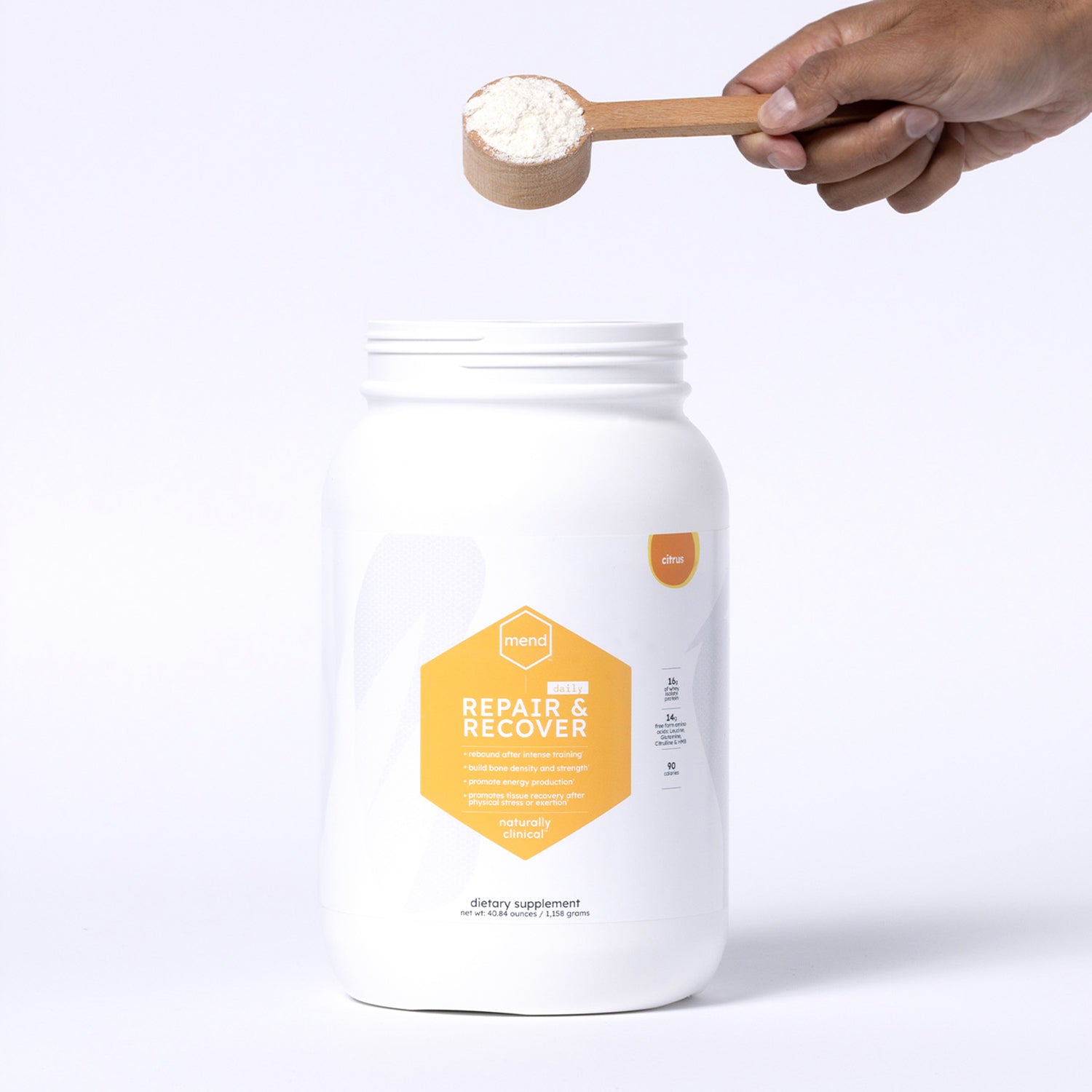
Featured This Issue: MEND Repair & Recover: Daily
This is a product I personally use.
MEND Repair & Recover: Daily provides 16 grams of protein and 14 grams of amino acids per serving, along with nutrients including whey protein, leucine, glutamine, HMB, vitamin D, vitamin C, zinc, and others selected to support muscle and tissue recovery. MEND also describes the product as third-party tested.
What I like about it is that it is not designed simply as another high-protein shake.
It is a recovery formulation.
That distinction matters.
During periods of heavy training, injury recovery, rehabilitation, or reduced activity, the goal is not merely to consume protein. It is to provide the body with the nutritional substrates it needs while protecting muscle and supporting tissue recovery.
I also want to make an important distinction given the subject of this issue:
I am not telling you that Consumer Reports tested MEND and declared it one of its winners. It was not one of the products identified in the Consumer Reports investigation I am discussing here.
I recommend it because of the formulation, quality approach, and my own experience using it, not because I want to imply that it participated in testing that it did not.

This is not a substitute for a protein-rich diet.
It is one tool I use to support nutrition and recovery when additional support makes sense.
Quick Answers
Are all protein powders contaminated with lead?
No. Consumer Reports found substantial differences among products. The concern is not that every protein supplement is unsafe, but that contamination levels can vary considerably and are not obvious from the label.
Should I stop using protein powder?
Not necessarily.
If protein powder helps you meet your nutritional needs, the better response is to evaluate the product more carefully rather than abandon supplemental protein altogether.
What should I look for when buying protein powder?
Look beyond protein grams and calories. Consider third-party testing, ingredient sourcing, manufacturing quality, heavy-metal testing, and how transparent the manufacturer is about its quality-control process.
📘 The Environment Still Matters
The same principle applies to regenerative medicine.
The procedure gets the attention.
But the environment around that procedure matters too.
Nutrition, muscle reserve, sleep, metabolic health, mechanical stability, and rehabilitation all influence the system being asked to recover.
That is one reason I created The Patient’s Guide to Ethical Regenerative Medicine.
It helps you understand what responsible regenerative care should include, what questions to ask, and what should happen before anyone reaches for a syringe.
The Patient's Guide to Ethical Regenerative Medicine
The Bottom Line
Do not obsess over protein grams while ignoring protein quality.
Protein is important.
Muscle is important.
And convenient protein products can absolutely have a place.
But if something goes into your body every single day, you deserve to know more than the number printed on the nutrition panel.
Ask what is in it.
Ask how it is tested.
Ask who made it.
Then choose accordingly.
To better movement,
Tammy J. Penhollow, DO
Architect of Spine and Joint Health
Precision Regenerative Medicine
Structure First. Precision Always.
If this helped you think about your symptoms more clearly, feel free to pass it along to someone dealing with something similar.
References
Consumer Reports. Protein Powders and Shakes Contain High Levels of Lead. October 2025, updated January 2026. Https://www.consumerreports.org/lead/protein-powders-and-shakes-contain-high-levels-of-lead-a4206364640/?msockid=23d1f5ba63da665b2ac7e35162a16765&utm_source=chatgpt.com
MEND. Repair & Recover: Daily. Product specifications and quality information.
DISCLAIMER: This media is for general informational purposes only and does not constitute the practice of medicine, nursing, or other professional healthcare services, including the giving of medical advice. No Doctor/Patient relationship is formed. Use of this information and the materials linked to this media is at the user’s own risk. The content on this media is not intended to be a substitute for professional medical advice, diagnosis, or treatment. Users should not disregard or delay in obtaining medical advice for any medical condition they have, and they should seek the assistance of their healthcare professionals for any such conditions. |
DISCLOSURE: It's my pleasure to provide you with this information and tools offered at no cost. To do this, please note that I am a partner with various companies that I trust. I do receive a small commission when you follow links and purchase items, but it's all free to view if you want it to be. Your price does not change if you decide to purchase. I only share opportunities I believe are a huge win for you, and I will never (ever!) share anything with you that I don’t personally use, support, or would recommend without an affiliate link. |
If you don't want to receive my newsletter, click unsubscribe below or change your subscription preferences. |